How Stamps and Postcards Helped India Count Its People
Wednesday, 2026/06/03250 words4 minutes3267 reads
As India prepares for its 16th census, a new exhibition curated by Vikas Kumar explores how the nation's postal system became an instrument of nation-building in the decades following independence. The collection of stamps, postmarks, and letters reveals a forgotten chapter in India's demographic history.
After 1947, independent India urgently required reliable demographic statistics to operate elections based on universal adult franchise and to construct a planned economy. The Constituent Assembly passed the Census Act in 1948, even before finalizing the constitution. However, the government confronted two immediate obstacles: persuading citizens to participate, and maintaining communication between enumerators and officials across a vast, impoverished, predominantly rural nation.
Trust was particularly crucial. Colonial censuses had faced boycotts and allegations of communal manipulation, making public outreach critical to legitimacy. The postal department, which expanded faster than most public networks after independence, became the solution. By 1968, over 100,000 post offices were delivering mail to 600,000 villages.
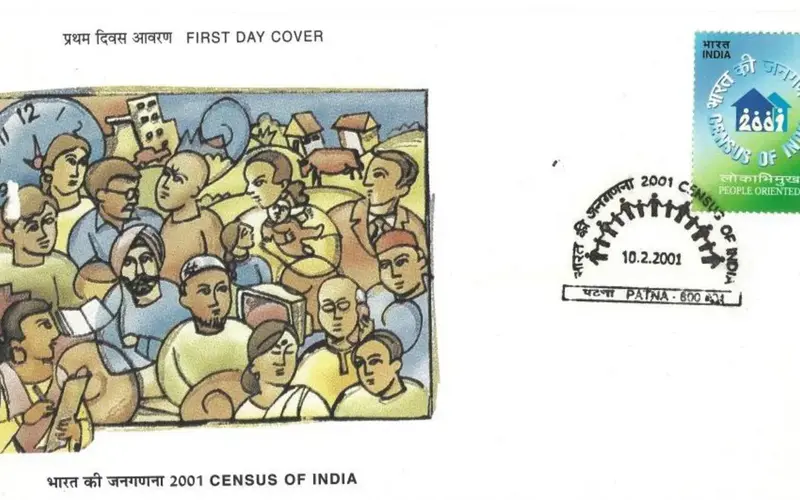
The postal materials document evolving governmental messaging. The 1951 census employed bilingual pictorial postmarks showing families. By 1971, commemorative stamps celebrated the census as "one of the largest administrative operations in the world," noting electronic computer processing. The 2001 campaign described the census as the "Mirror of the nation" and "Group Photograph of the nation," framing it as collective self-portraiture rather than mere bureaucracy.
Today's digital census, conducted via mobile apps, represents a fundamental transformation. Yet Kumar argues that technology alone cannot guarantee reliable data—awareness and trust remain essential, even as the postal system's reach diminishes.