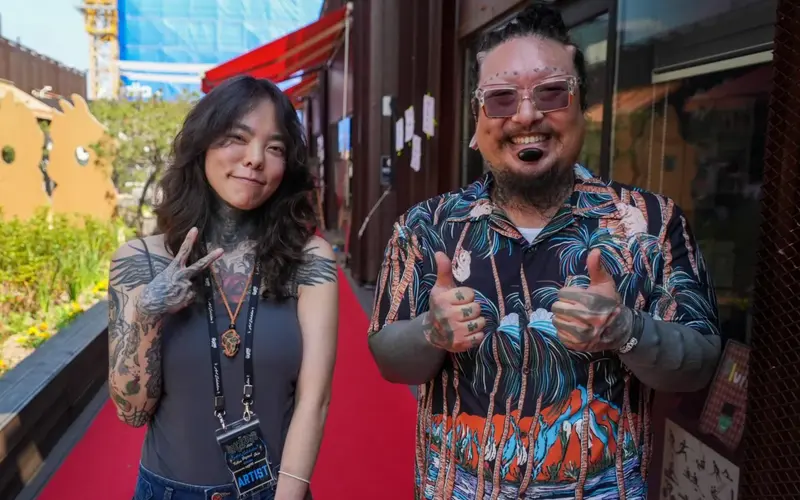
South Korea's Tattoo Artists Step into the Limelight
Wednesday, 2026/06/03214 words3 minutes2843 reads
When Kim Tae-nam took the stage at Ink Bomb last Saturday, his relief was palpable. After 34 years of operating in legal limbo, South Korean tattoo artists could finally practice their craft without fear of prosecution.
The country's Supreme Court had just overturned its 1992 ruling that classified tattooing as a medical act, ending a decades-long struggle for legitimacy. The law, ostensibly designed to address hygiene concerns, had forced an estimated 350,000 tattoo artists underground, exposing them to arrest, fines, and exploitation. The Tattoo Union provided legal support to at least 50 prosecuted artists annually, though many more cases went unreported.
The ban created particularly vulnerable conditions for young women tattooists, who faced blackmail and harassment from clients threatening to report them. According to union founder Kim Do-yoon, known as Doy, some victims took their own lives under the pressure.
Despite the legal constraints, Korean tattooing flourished internationally. Fine-line Korean illustrations gained global recognition in the mid-2010s through social media, while celebrities from BTS's Jungkook to Olympic diver Woo Ha-ram helped shift public perception domestically. Yet stigma persists in this conformist society, where tattoos can still hinder job prospects and result in exclusion from certain public spaces. As the health ministry prepares to introduce licensing standards, artists remain cautiously optimistic about their newfound legitimacy.