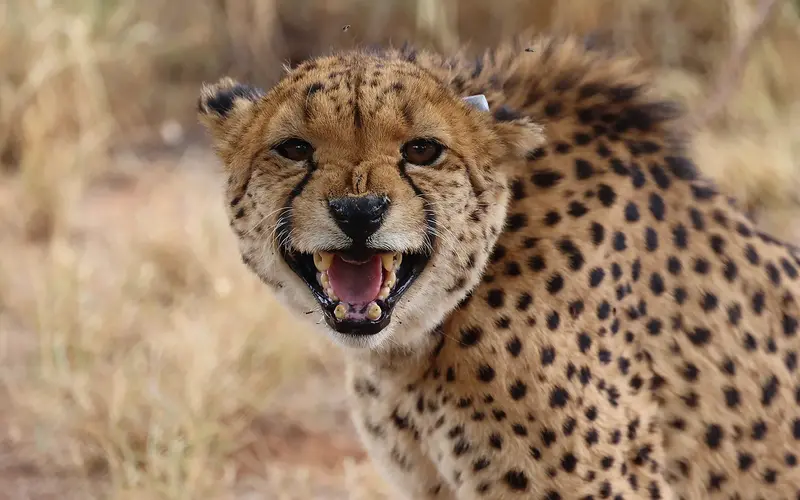
Tracking Animal Panic from Space
Friday, 2026/05/29206 words3 minutes3202 reads
After decades of technological development, wildlife surveillance has reached a pivotal moment with the launch of Icarus, a satellite system dubbed the "Internet of Animals." This breakthrough enables scientists to monitor animal behavior on an unprecedented global scale, potentially revolutionizing anti-poaching efforts.
In Namibia's Okambara reserve, researchers conducted controlled experiments simulating poacher intrusions. Armed with rifles, they triggered panic responses in wildlife while drones and GPS tags recorded the animals' distinctive dispersal patterns. These "signatures of panic" are being used to train algorithms that can alert rangers to genuine threats in real time.
The technology relies on miniaturized sensors that track not only GPS coordinates but also physiological data such as heart rate and body temperature. Martin Wikelski, director of the Max Planck Institute of Animal Behavior, envisions tagging 100,000 animals by 2030, creating a network where common species act as sentinels protecting endangered ones like rhinos. In South Africa's Kruger National Park, where over 10,000 rhinos have been poached in 15 years, this system has already helped rescue wild dogs from snares.
The satellite constellation will extend coverage beyond protected reserves to remote regions like the Congo Basin and Amazon, answering fundamental questions about animal migration, habitat requirements, and mortality that have long remained elusive.