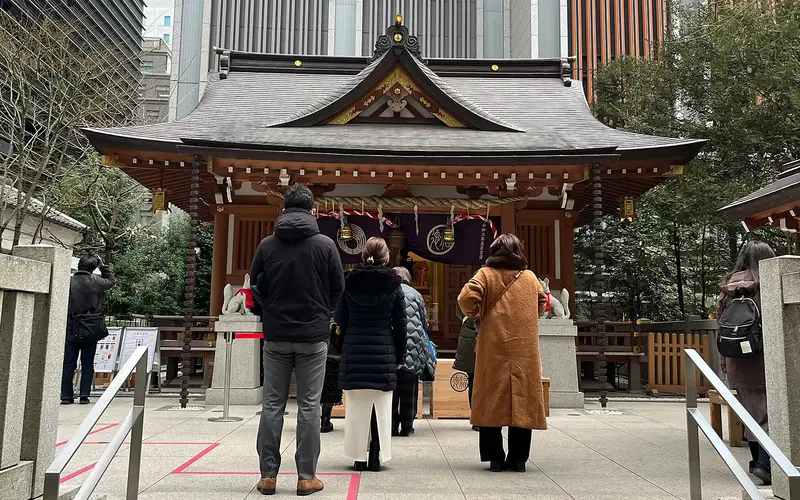
The Tiny Tokyo Shrine Where People Pray for Concert Tickets
Monday, 2026/05/11232 words3 minutes3153 reads
Nestled within Tokyo's frenetic Nihonbashi commercial district, Fukutoku Shrine offers an unexpected sanctuary where ancient spiritual practices intersect with contemporary pop culture obsession. This millennium-old site has evolved from a traditional place of worship into a pilgrimage destination for music fans seeking divine intervention in Japan's notoriously competitive concert ticket lottery system.
Established in the 9th Century and dedicated to Inari, the deity of prosperity and abundant harvests, Fukutoku gained prominence when samurai lord Tokugawa Ieyasu became its patron in 1590. His patronage granted the shrine special privileges, including hosting lotteries that funded improvements while rewarding winners with jackpots. This historical association with chance and fortune laid the groundwork for the shrine's modern reputation.
The convergence of tradition and pop culture intensified during the 1990s J-Pop explosion, when idol culture and the concept of 'oshi' – one's chosen favorite band member – became deeply embedded in Japanese fan culture. As concert tickets became increasingly scarce due to multi-step online lottery systems designed to ensure fairness, devoted fans turned to Fukutoku, hoping spiritual devotion might tip the odds in their favor. The practice embodies a Japanese proverb: 'Do everything you can and leave your fate up to luck.'
Scholars like Beth Carter suggest these rituals shouldn't be dismissed as mere materialism, but rather understood as preparations for spiritual exchange, where the pursuit of joy creates internal peace and readiness for deeper religious experience.