South Korean Shops Use Robots as Workers
Monday, 2026/07/06218 words3 minutes1572 reads
An increasing number of South Korean businesses are transitioning to unstaffed operations as proprietors grapple with escalating labor costs and a contracting workforce. The phenomenon has expanded beyond convenience stores to encompass self-service coffee shops, ramen restaurants, flower shops, pet supply stores, and clothing retailers. Customers typically place orders and process payments through automated machines, while surveillance cameras and digital monitoring systems enable remote oversight.
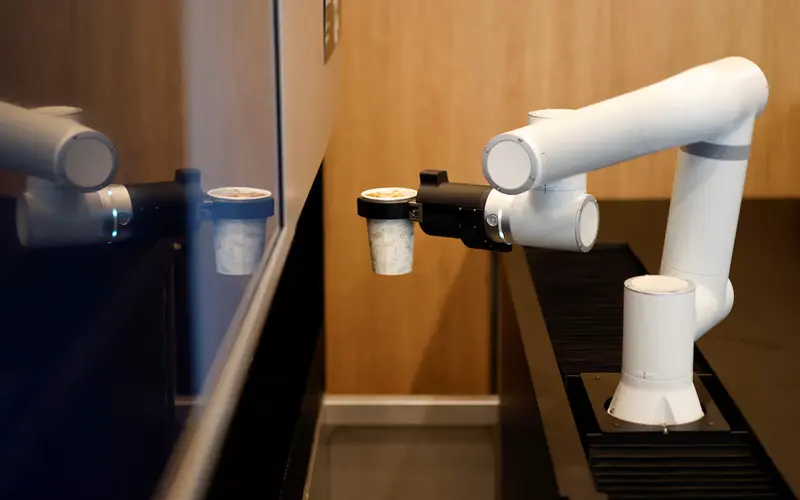
Robotic technology has emerged as a particularly innovative solution. Lounge X, a South Korean robotic coffee-shop operator, employs a robotic arm named Baris to prepare beverages ranging from Americanos to matcha lattes. These establishments can maintain continuous operation, with human staff visiting approximately one hour daily for restocking and equipment maintenance.
While conventional cafés may generate superior revenue, their substantially higher labor expenses significantly erode profitability. Unstaffed stores can achieve profit margins approaching 40%, contrasting sharply with the 10% to 15% margins typical of traditional staffed establishments. South Korea had an estimated 9,000 unstaffed shops by late 2024, with projections suggesting quadrupling since 2020.
This transformation reflects profound demographic challenges confronting South Korea, including population ageing and one of the world's lowest fertility rates. The viability of unstaffed stores also depends on South Korea's relatively low crime rate and widespread adoption of digital payment systems, which facilitate honest customer behavior and seamless transactions.