Saving Koala Genes: Queensland's New Genetic Bank
Tuesday, 2026/08/04230 words3 minutes1254 reads
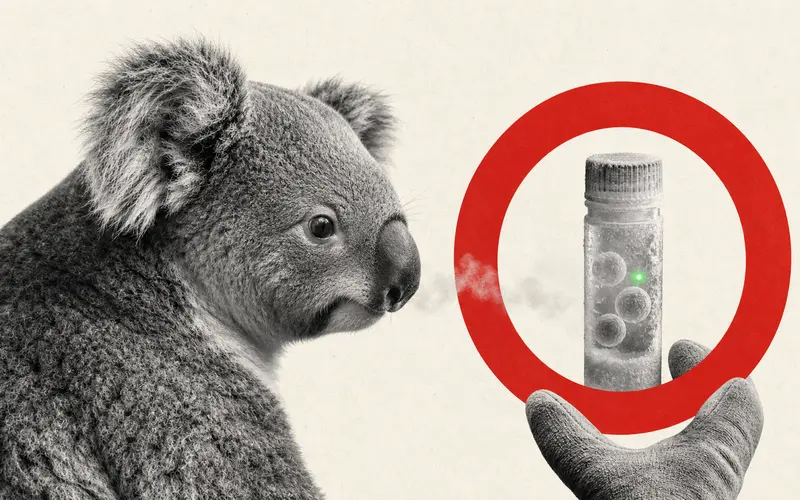
Scientists at the University of Queensland's Gatton campus are collaborating with wildlife hospitals to establish Queensland's first coordinated biobank of koala reproductive material. The initiative involves collecting sperm and egg cells from koalas that succumb to illness or injury, then analyzing and cryopreserving the samples to safeguard genetic diversity in this endangered marsupial species.
The reproductive cells are stored in liquid nitrogen at approximately minus 196 degrees Celsius. Researchers characterize this frozen repository as a crucial genetic safety net: without such preservation efforts, the distinctive genetic profiles of individual koalas face permanent extinction upon the animal's death. The project includes plans to systematically classify samples according to each specimen's health status and genetic value, facilitating efficient retrieval for future applications.
Genetic diversity is fundamental to a species' capacity to adapt to multifaceted challenges including environmental change, thermal stress, disease outbreaks, and fire events. The preserved germplasm could ultimately support conservation initiatives through assisted reproductive technologies such as artificial insemination or in vitro fertilization. This project leverages the University of Queensland's established expertise in marsupial reproductive biology and previous assisted-breeding research.
However, researchers emphasize that this biobanking approach represents a supplementary conservation strategy rather than a substitute for protecting wild koala populations and their native habitat. The initiative aims to safeguard irreplaceable genetic material and enable future conservation programs, while acknowledging that it cannot independently address all threats facing koala populations.