Not So Dusty: How Tech Is Changing Woodworking
Saturday, 2026/05/16211 words3 minutes4016 reads
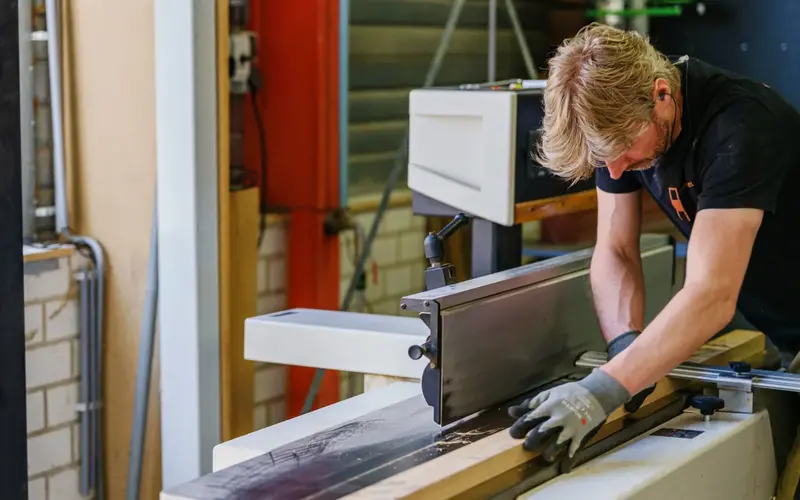
The woodworking industry is undergoing a profound transformation driven by technological advancement, yet the fundamental principles remain rooted in centuries-old craftsmanship. Furniture maker Ryan Saunders observes that contemporary workshops can achieve near dust-free environments, a development stemming from enhanced understanding of occupational respiratory health. Companies like BlastGate.com have optimized dust collection systems, enabling one Dutch kitchen manufacturer to recoup their investment within six months through reduced energy consumption.
Safety innovations represent perhaps the most dramatic evolution. SawStop's electrical signal detection system halts spinning blades within five milliseconds of skin contact, transforming potentially catastrophic injuries into minor nicks. Altendorf's Hand Guard technology employs cameras and artificial intelligence to preemptively identify hazardous hand-blade proximity. Both companies continue refining their algorithms to minimize false alarms while maintaining worker protection.
The democratization of computer numerical control (CNC) technology has broadened accessibility, with increasingly intuitive software enabling diverse users to execute precise cuts. Automated Architecture has pioneered mobile microfactories—shipping containers housing robots capable of fabricating all timber panels for a typical home in one day on-site. Meanwhile, generative AI tools like Stable Diffusion assist propmakers in rapidly visualizing design options. Despite these digital advances, some practitioners like Saunders deliberately eschew certain technological features, arguing that excessive digitalization can diminish the essential human element of woodworking craftsmanship.