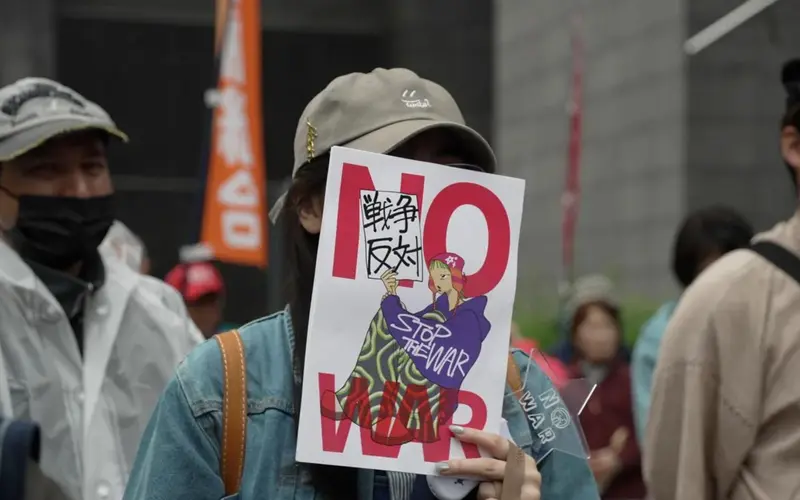
Anti-War Protests in Japan
Friday, 2026/05/15219 words3 minutes4145 reads
Japan is witnessing its most significant anti-war demonstrations in decades as Prime Minister Sanae Takaichi pursues substantial departures from the nation's post-war pacifist framework. The protests, which have spread from Tokyo to major cities including Osaka, Kyoto, and Fukuoka, reflect profound anxieties about Japan's evolving national identity.
Since assuming office in October 2025, Takaichi has implemented controversial security reforms, including lifting long-standing restrictions on lethal weapons exports and expanding Japan's military capabilities abroad. The government justifies these measures as essential responses to an increasingly volatile regional environment, characterized by an assertive China, an unpredictable North Korea, and pressure from the United States to assume a more active security role.
The controversy centers on Article 9 of Japan's 1947 constitution, which renounces war as a sovereign right and prohibits maintaining military forces for warfare. This pacifist clause emerged from the devastation of World War Two, particularly the atomic bombings of Hiroshima and Nagasaki that claimed approximately 200,000 lives by 1945's end. While supporters view it as a moral commitment shaped by historical trauma, critics argue it renders Japan vulnerable in contemporary geopolitical realities.
Public opinion remains deeply divided. Protesters spanning generations fear Japan risks being drawn into overseas conflicts, while reform advocates contend that outdated constitutional constraints prevent Japan from adequately deterring aggression and supporting allies in an unstable world.