Is US Tipping Culture Spreading Overseas?
Sunday, 2026/05/31203 words3 minutes4163 reads
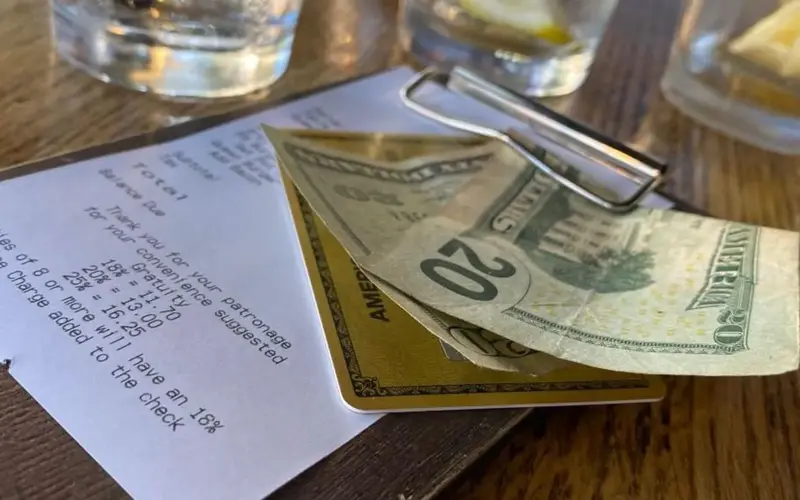
The contentious debate surrounding American tipping culture has intensified, with many arguing the practice has become excessive. In metropolitan areas such as New York, Boston, and Chicago, gratuities of 20% are now standard expectations, prompting concerns that tipping has extended beyond traditional service contexts.
This phenomenon is increasingly manifesting internationally. Iceland exemplifies this shift - American visitor numbers surged from 50,810 in 2010 to 660,114 last year, fundamentally altering local customs. A spokesperson for Efling Union notes that while tipping contradicts Iceland's social consensus that employers bear responsibility for adequate compensation, digital payment terminals now routinely prompt customers for gratuities, antagonizing locals who view this as an unreasonable surcharge atop already elevated prices.
The American system's foundation lies in antiquated federal legislation from 1938, which permits employers to pay tipped workers merely $2.13 hourly - substantially below the $7.25 standard minimum wage. This creates dependence on customer generosity. Professor Michael Lynn of Cornell University attributes tipping's global proliferation to digital payment technology. UK establishments utilizing such systems increased 78% between 2022 and 2024, while consultant Lisa Harris observes service charges rising from 12.5% to 15% in high-end restaurants, potentially enabling proprietors to augment staff compensation without directly increasing wages amid mounting operational costs.