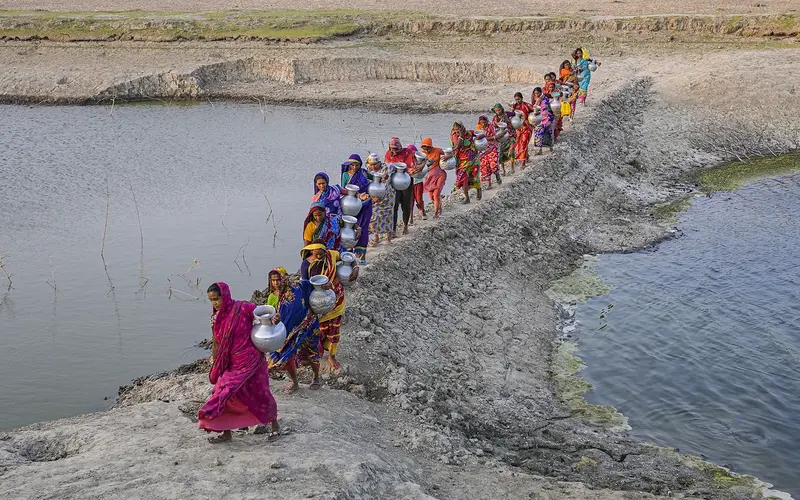
Earth's Fight Against Encroaching Saltwater
Monday, 2026/03/02183 words3 minutes1940 reads
Saltwater intrusion is becoming a serious global problem. This happens when seawater moves inland into freshwater sources that people use for drinking and farming.
The problem affects low-lying countries like The Gambia, Vietnam, and Bangladesh most severely. In The Gambia, farmer Nurse Senneh has experienced this crisis firsthand. Four years ago, saltwater from the Atlantic Ocean began creeping into her one-hectare rice field. Despite constructing makeshift dikes three times using mud-filled bags, she could not stop the intrusion. Eventually, she had to abandon her field entirely.
Climate change is the primary cause of this crisis. Rising temperatures have reduced The Gambia's annual rainfall by 30% since the 1970s. At the same time, sea levels are rising, pushing saltwater up to 250km inland through the Gambia River. Between 2009 and 2023, The Gambia saw a 42% reduction in rice cultivation areas.
The impact extends beyond The Gambia. In the US, residents of Louisiana have noticed salty tap water, and Florida's drinking water supply is threatened. Scientists warn that by 2050, all continents except Antarctica will experience coastal saltwater intrusion of at least 1km inland.