Why Do Mosquitoes Bite Some People More Than Others?
Monday, 2026/07/13236 words3 minutes468 reads
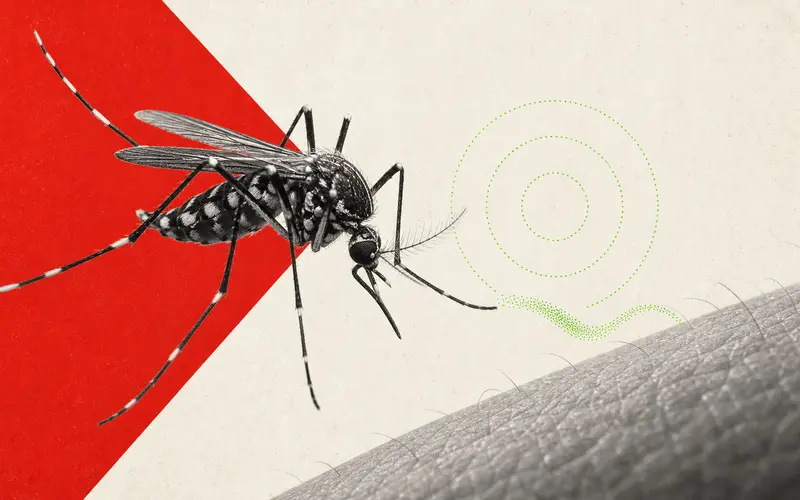
Female mosquitoes exclusively bite humans to obtain the protein necessary for egg development. These insects employ sophisticated detection mechanisms, identifying potential hosts from approximately 10 metres away through visual and olfactory cues. Carbon dioxide emissions from human respiration and skin trigger host-seeking behaviour, with adults generally producing higher concentrations than children, thereby becoming more attractive targets.
Beyond carbon dioxide, mosquitoes respond to thermal and moisture signals. Physiological states such as pregnancy, physical exertion, and larger body mass can amplify these attractant signals. At closer proximity, mosquitoes discriminate between individuals based on skin and breath odours. The skin microbiome metabolizes substances on the epidermis, generating volatile organic compounds. Researchers have catalogued over 500 such compounds on human skin. A comprehensive study involving 64 participants who wore nylon sleeves revealed that mosquitoes exhibited marked preference for individuals with elevated carboxylic acid levels, with the most attractive participant scoring 100 times higher than the least attractive.
These preferences demonstrated remarkable stability across multiple years. Twin studies suggest genetic inheritance may influence relevant traits, while skin bacterial composition appears to modulate body odour profiles. However, perceived bite frequency may be distorted by individual immune responses, as some people develop pronounced reactions while others remain largely asymptomatic. Despite limited evidence supporting garlic or vitamin B supplementation as repellents, proven interventions include DEET, picaridin, or PMD-based products, complemented by protective clothing. Regular reapplication is essential as efficacy diminishes with perspiration and time.