Virtual Parents: Young Chinese Seek Comfort Online
Tuesday, 2026/06/16240 words3 minutes6030 reads
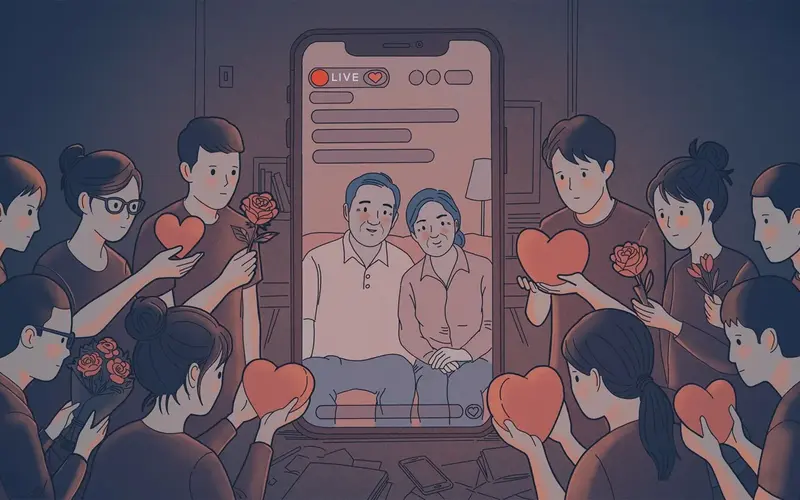
Vincent Zhang, a 33-year-old Shanghai-based tech worker, has developed an unconventional coping mechanism: seeking emotional validation from "virtual parents" online. Pan Huqian and Zhang Xiuping, a middle-aged couple with nearly two million Douyin followers, represent a burgeoning niche of content creators offering surrogate parental warmth to China's stressed youth.
Their videos feature gentle reassurances rarely heard in traditional Chinese households: "Don't push yourself too hard. Mum and Dad know that you have endured a lot." This resonates deeply with Vincent, whose weekly calls with his actual parents are fraught with criticism about his career choices and relationship status. "My parents are never the ones who tell me not to drive myself too hard or that I am already good enough," he laments.
This phenomenon reflects broader generational tensions in contemporary China. While Vincent's generation grew up during unprecedented economic prosperity, they now face a sluggish economy with youth unemployment hovering above 15%. The pressure to excel academically and professionally, combined with traditional expectations of filial piety, has created what Vincent calls "generational trauma."
The frustration has spawned viral memes like "gourd soup literature," which satirizes parents who ignore their children's wishes while claiming to act in their best interests. Twenty-eight-year-old Zhao Xuan has even muted her family group chat, finding solace in humor rather than confrontation. Vincent acknowledges the commercial nature of virtual parenting content but remains pragmatic: "I believe that a little bit of warmth is better than nothing."