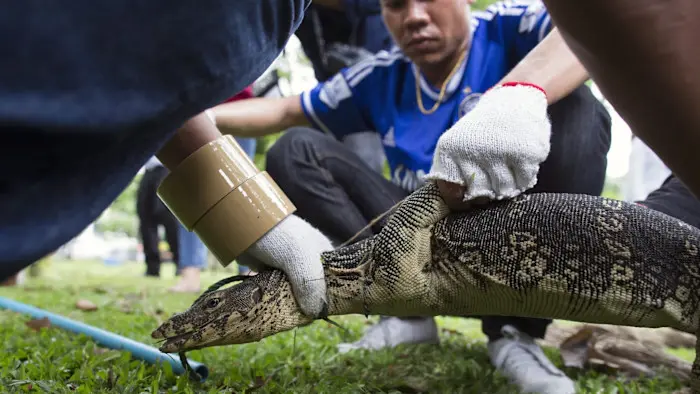
The Giant Reptiles of Bangkok
Sunday, 2026/01/25199 words3 minutes2558 reads
In the heart of Bangkok, the world's most visited metropolis, an extraordinary ecological phenomenon is unfolding. The Asian water monitor, the second-largest lizard species globally, has reclaimed its territory in this urban jungle, offering a unique juxtaposition of ancient wildlife and modern cityscape.
These formidable reptiles, once marginalized to the city's periphery, have demonstrated remarkable adaptability, flourishing in the network of parks and canals that interlace the Thai capital. Lumphini Park, a verdant oasis amid the concrete sprawl, has become an epicenter for these prehistoric-looking creatures, providing visitors with an unparalleled opportunity to observe them in a quasi-natural habitat.
The monitors' resurgence is not confined to designated green spaces. They have ingeniously colonized Bangkok's extensive canal system, their presence a poignant reminder of the city's ecological heritage. This unexpected cohabitation has sparked a shift in public perception, challenging long-held superstitions and fostering a new appreciation for urban biodiversity.
While the integration of these reptiles into Bangkok's urban fabric has not been without challenges, it represents a compelling case study in urban ecology. As cities worldwide grapple with biodiversity loss, Bangkok's experience with water monitors offers valuable insights into the potential for harmonious coexistence between urban development and wildlife conservation.