The First Handheld Digital Camera: A Revolutionary Invention
Tuesday, 2025/12/09240 words3 minutes3270 reads
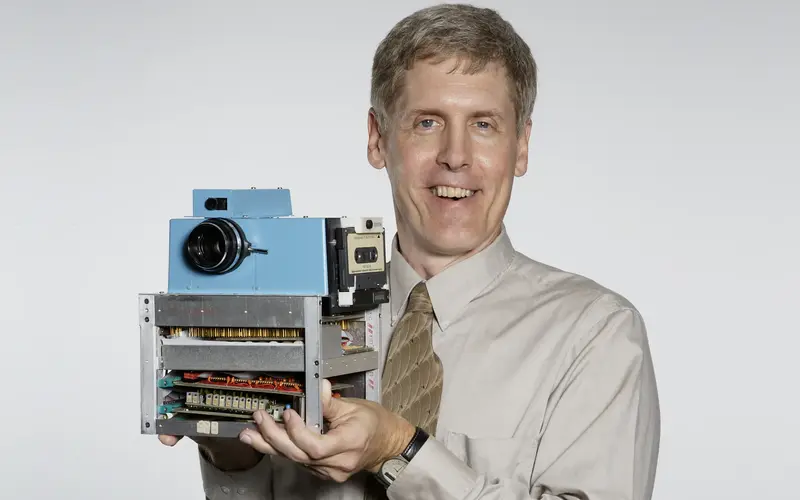
In 1975, Steve Sasson, a young electrical engineer at Eastman Kodak, conceived and constructed the world's first handheld digital camera. This groundbreaking device, weighing approximately 8 pounds and resembling an unwieldy toaster with a protruding lens, marked a pivotal moment in the history of photography.
Sasson's invention was a radical departure from conventional film-based cameras. It utilized a charge-coupled device (CCD) to capture images electronically, storing them on a cassette tape. The camera's resolution was a mere 0.01 megapixels, producing grainy, black-and-white images. The image capture process was far from instantaneous, requiring 23 seconds to record a single photograph.
Despite its technical limitations, Sasson's creation was a harbinger of the digital revolution in photography. The camera's development was not part of an official Kodak project; rather, it was the result of Sasson's initiative and ingenuity. He cobbled together various components, including parts from a Super 8 movie camera and a digital voltmeter, to bring his vision to life.
The reception of Sasson's invention within Kodak was mixed. While some executives were intrigued by the potential of digital technology, others were skeptical about its practicality and relevance to Kodak's core business of film photography. This ambivalence foreshadowed the challenges Kodak would face in the coming decades as digital photography gradually supplanted traditional film.
Sasson's prescient invention laid the foundation for the digital imaging revolution, ultimately transforming not only the photography industry but also how society captures, shares, and preserves visual information.