Scientists Search for Habitable Planets
Sunday, 2026/07/12260 words4 minutes885 reads
The question of whether life exists beyond Earth has shaped human curiosity for centuries. Today, advances in astronomy are turning that question into a more systematic scientific search.
Researchers are studying exoplanets, or planets outside our solar system, that may be habitable. In this context, habitability usually means that a planet could have conditions such as liquid water, a stable atmosphere, and temperatures that might permit biological activity.
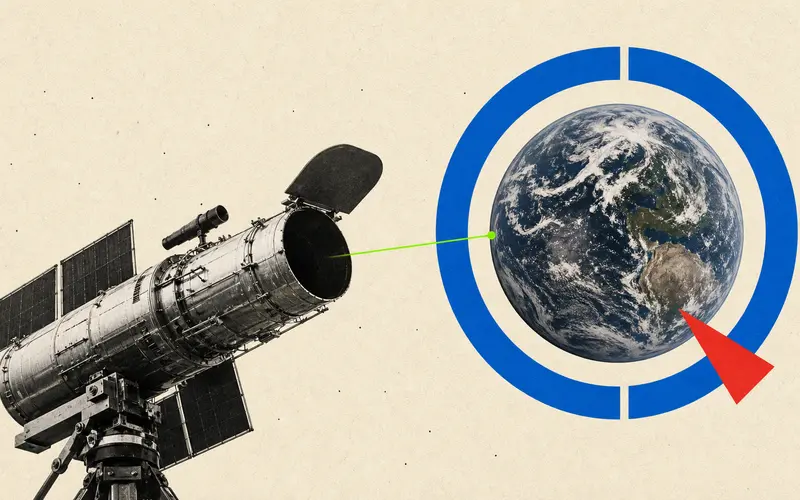
The work is technically demanding. A candidate planet is often located many light-years from Earth, making direct exploration impossible with current technology. Instead, astronomers rely on telescopes to detect and analyze small changes in light. When a planet passes in front of its star, it blocks a tiny amount of starlight. That signal can reveal information about the planet's size, orbit, and possible atmospheric features.
Space-based observatories have already helped identify thousands of exoplanets. Some appear to be especially interesting targets for future research, but scientists distinguish carefully between habitability and confirmed life.
A planet with conditions that could support life is not evidence that life is present. Researchers would need additional data, including possible chemical signatures in an atmosphere, before making any biological claim.
The search carries scientific and philosophical importance. A confirmed discovery of life beyond Earth would reshape humanity's understanding of its place in the universe. At the same time, even an unsuccessful search can deepen knowledge of planetary systems, stars, and the conditions under which life may begin.
For now, the effort continues. The search for another Earth remains one of science's most difficult and meaningful long-term projects.