Rats Driving Cars: A Lesson in Joy and Anticipation
Thursday, 2026/01/08315 words4 minutes3210 reads
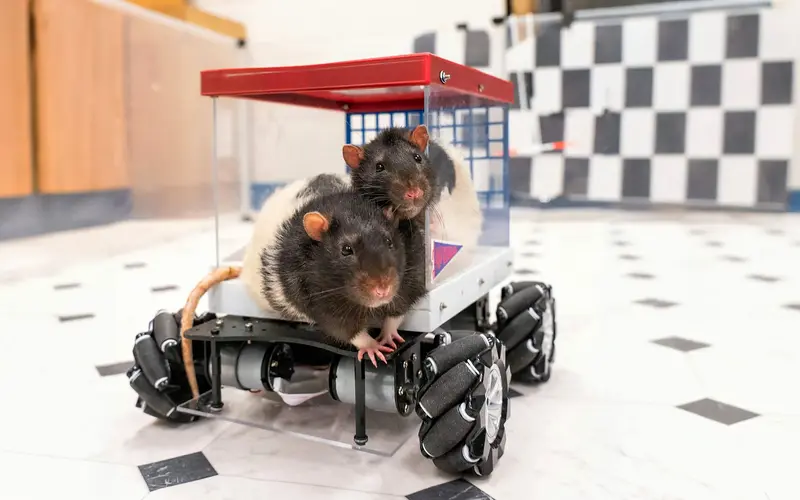
In a groundbreaking study, researchers at the University of Richmond have successfully taught rats to operate miniature vehicles, shedding light on the intricate relationship between environmental enrichment, skill acquisition, and emotional states in rodents. The experiment, which initially aimed to explore neuroplasticity, has unexpectedly opened new avenues for investigating positive emotions and anticipation in animals.
The researchers crafted rudimentary 'rat-operated vehicles' (ROVs) from plastic containers, equipping them with a wire that functioned as a gas pedal. Remarkably, the rats not only learned to drive these contraptions but also demonstrated precise steering capabilities in their pursuit of a Froot Loop reward. This adaptive behavior underscores the remarkable cognitive flexibility of these creatures.
A pivotal finding emerged from the comparison of rats housed in enriched environments versus those in standard laboratory cages. The former group, exposed to a plethora of stimuli and social interactions, exhibited accelerated learning in their driving skills. This observation lends credence to the hypothesis that complex environments foster enhanced neuroplasticity - the brain's capacity to reorganize and form new neural connections throughout life.
Intriguingly, the rats displayed an unanticipated enthusiasm for their driving lessons, often eagerly initiating the process before the formal commencement of training sessions. This behavior prompted the researchers to delve deeper into the realms of anticipation and joy in animals, concepts traditionally associated with human psychology.
The study has since evolved to incorporate investigations into the effects of delayed gratification on rat behavior. Preliminary data suggests that rats conditioned to wait for rewards may exhibit more optimistic traits and enhanced cognitive performance. This line of inquiry could potentially elucidate the neurological mechanisms underlying positive experiences and their impact on brain function across species.
As this research progresses, it not only challenges our preconceptions about animal cognition but also offers tantalizing insights into the universal neural principles that govern behavior, learning, and emotional states in both human and non-human animals alike.