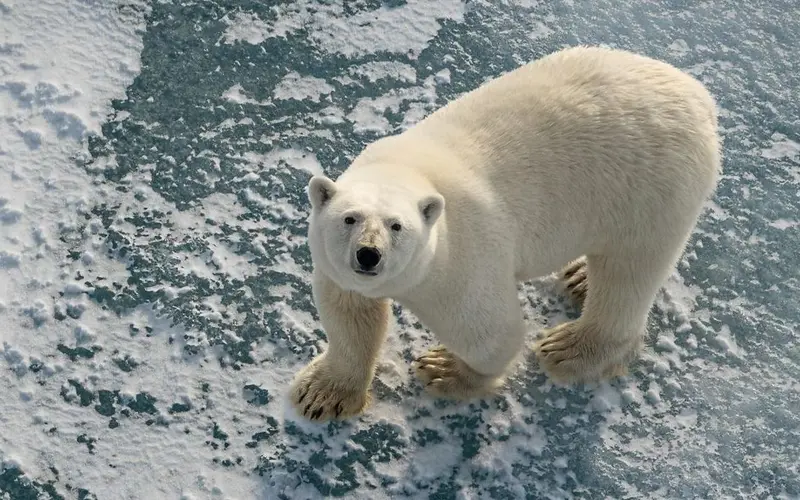
Polar Bears in Norway Getting Fatter
Sunday, 2026/02/08207 words3 minutes3210 reads
In a surprising development that challenges conventional wisdom, polar bears in the Norwegian Arctic archipelago of Svalbard have exhibited increased body mass and improved health since the early 1990s, despite the persistent decline in sea ice attributed to climate change. This phenomenon has perplexed scientists who had anticipated a detrimental impact on the bears' well-being.
Traditionally, polar bears rely on sea ice as a crucial platform for hunting seals, their primary prey rich in blubber. However, a comprehensive study involving 770 adult bears, conducted between 1992 and 2019, revealed a significant increase in the animals' fat reserves. Researchers posit that this adaptation is likely due to the bears diversifying their diet to include more land-based prey, such as reindeer and walruses.
The resurgence of walrus populations, following their protection in Norway since the 1950s, has provided an additional source of calorie-dense nutrition for the bears. Moreover, the concentration of seals in diminishing ice areas may have inadvertently made them more accessible targets. While these findings present a positive short-term outlook, scientists caution against long-term optimism. As sea ice continues to recede, bears may be forced to expend more energy traveling to hunting grounds, potentially negating their current nutritional gains and jeopardizing their survival in the Arctic ecosystem.