Plastic from 1960s Canada Washes Up on Orkney Beach
Friday, 2026/02/20238 words3 minutes2473 reads
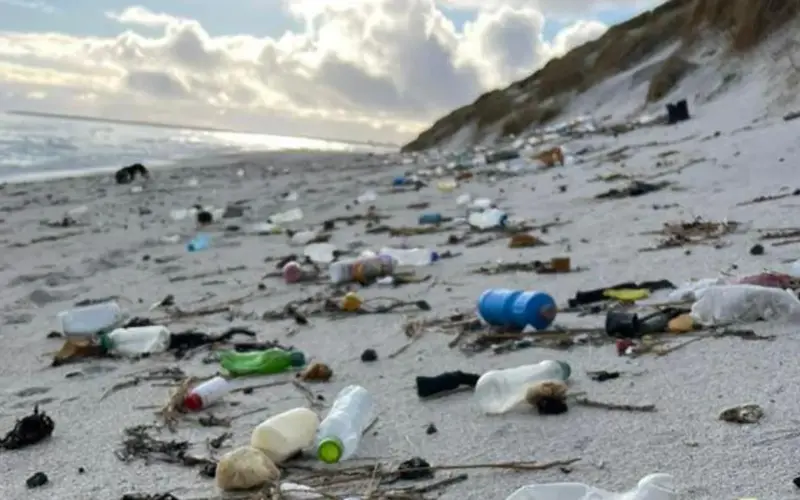
An unprecedented volume of plastic waste, originating from Canada and dating back to the 1960s and 1970s, has recently inundated Howar Sands beach in Sanday, Orkney, leaving environmental volunteers grappling with the scale of marine pollution.
David Warner, the creative sustainability coordinator who orchestrates beach cleaning initiatives, has witnessed a dramatic escalation in debris accumulation. While he retrieved merely 42 plastic bottles throughout last year, he has already amassed hundreds within the opening weeks of this year. His calculations suggest over 300,000 polystyrene fragments are dispersed across just 70 square metres of shoreline. Some bottles bear the insignia of defunct brands, such as "Sqezy," which ceased production in the 1980s, demonstrating the alarming longevity of plastics in marine ecosystems.
Marine conservation experts attribute this phenomenon to extraordinary meteorological conditions, particularly persistent south-easterly winds, coupled with the erosion of coastal landfill sites releasing decades-old refuse. The Marine Conservation Society emphasizes that plastic pollution never truly disappears and can traverse entire oceans over time. Warner expresses particular concern about future accumulations, noting that waste from the 1990s and 2000s has yet to arrive, portending even more substantial deposits.
The ecological implications are significant, as Howar Sands constitutes a site of special scientific interest for nesting avian species. Undeterred by the daunting challenge, Warner envisions establishing a formal beach cleaning collective and repurposing the collected plastic into provocative artistic installations to amplify public consciousness regarding the enduring consequences of plastic consumption.