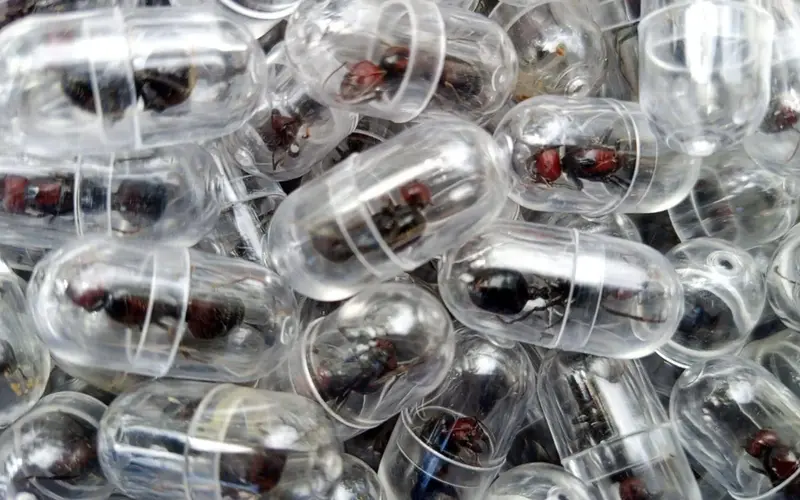
One Ant for $220: The New Frontier of Wildlife Trafficking
Monday, 2026/04/06261 words4 minutes1731 reads
Kenya, traditionally associated with high-profile wildlife crimes involving elephant tusks and rhino horns, now confronts an unprecedented challenge: the illicit trafficking of giant African harvester ants. These distinctive red insects, scientifically known as Messor cephalotes, command prices up to $220 per queen on international black markets, fueled by a burgeoning global fascination with ant-keeping as a hobby.
The agricultural town of Gilgil in Kenya's Rift Valley has emerged as the epicenter of this clandestine trade. During the rainy season, winged queens embark on mating flights, presenting opportune moments for collectors. A single fertilized queen possesses the remarkable capacity to establish colonies numbering hundreds of thousands of workers, with some nests persisting for over 70 years.
Last year's seizure of 5,000 live queens destined for Europe and Asia, followed by this month's confiscation of 2,000 specimens at Jomo Kenyatta International Airport, has illuminated the scale of this under-reported phenomenon. The ants' popularity stems from their fascinating seed-harvesting behavior and suitability for observation in formicaria—transparent enclosures designed for colony monitoring.
However, the ecological ramifications are profound. As both keystone species and ecosystem engineers, harvester ants play indispensable roles in seed dispersal and grassland health. Scientists warn that unsustainable harvesting threatens biodiversity and could potentially introduce invasive species to foreign ecosystems. Research published in Biological Conservation revealed that over a quarter of ant species traded in China were non-native, despite import prohibitions.
While conservationists advocate for enhanced protections under the Convention on International Trade in Endangered Species, others propose regulated commercialization as a sustainable alternative that could generate community livelihoods while preserving ecological integrity.