Office Chair Racing in Japan
Monday, 2026/04/13245 words4 minutes2929 reads
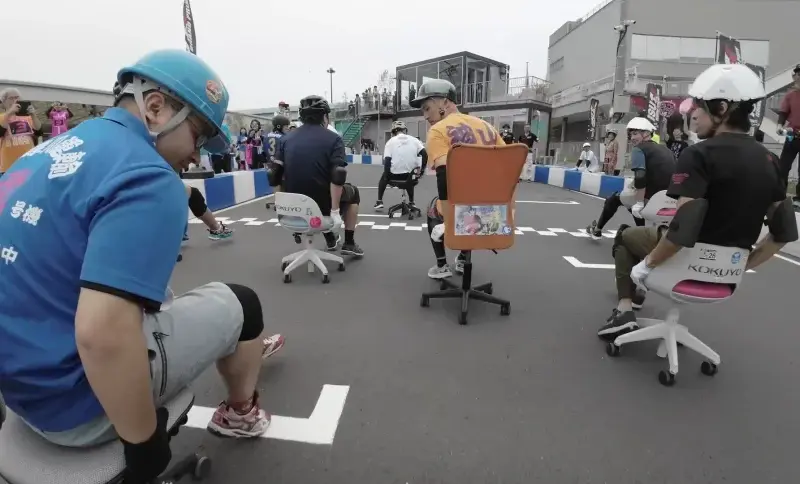
In an unconventional twist on competitive sports, office chair racing has emerged as a nationwide phenomenon in Japan. Teams of three competitors navigate urban circuits on standard office chairs, propelling themselves backwards by kicking the ground with intense leg power. These endurance races span two hours, with top teams covering 20 to 25 kilometers through challenging courses.
Founded by Tsuyoshi Tahara in 2010, the sport originated from a childhood incident where he was reprimanded for playing with an office chair. What began as a single event in Kyotanabe has evolved into an annual series across 10 cities, attracting participants from major corporations including Toyota, as well as police officers, firefighters, and military personnel.
The sport serves as a counterbalance to Japan's notoriously demanding work culture, allowing office workers to briefly reclaim the playfulness of childhood. Yasunori Miura exemplifies the dedication required, training four times weekly on a heavier gym chair to increase leg resistance, supplemented by twice-weekly strength training sessions. The sport demands both individual prowess and team cohesion, as Miura notes that victory requires all three members to maintain high performance levels.
Drawing deliberate parallels to Formula One racing, events are branded as Grands Prix, complete with pit stops for player changes and strategic vehicle selection. Racers favor lighter chairs with minimal backrests and larger wheels, while safety regulations mandate helmets and protective gear. The coveted first prize—90 kilograms of rice—reflects Tahara's vision of a universally accessible, shareable reward that embodies Japanese cultural values.