How Chinese Technology and Manufacturing Are Powering the 2026 World Cup
Friday, 2026/07/03260 words4 minutes4326 reads
While China's national football team remains absent from the 2026 FIFA World Cup, Chinese enterprises have become integral to the tournament's technological infrastructure and commercial ecosystem, marking a significant evolution in their global sporting presence.
Lenovo, serving as FIFA's official technology partner, exemplifies this transformation. The company supplies comprehensive AI-based systems including Football AI Pro, an analytical assistant that processes match data, tracking information and tactical records. Available to all 48 participating nations in 15 languages, the platform democratizes sophisticated analysis previously accessible primarily to well-funded organizations. Coaches can pose queries in natural language and receive visualizations and strategic insights, potentially leveling the competitive playing field.
Lenovo's contributions extend to officiating technology. The company developed detailed three-dimensional avatars of all 1,248 players for enhanced semi-automated offside determinations, presenting positional data through realistic imagery to improve spectator comprehension of complex decisions. Additionally, Referee View employs stabilization software on lightweight referee-worn cameras, offering broadcasters unprecedented perspectives on match intensity and officiating challenges.
Hisense, another prominent Chinese sponsor with FIFA ties dating to 2017, provides display technology for video assistant referee systems and sensory rooms designed to accommodate spectators with sensory sensitivities through reduced noise and softer lighting.
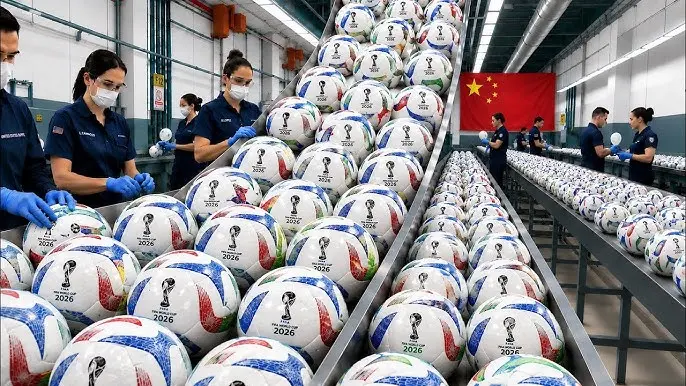
Beyond stadium technology, Yiwu's manufacturing sector exported 2.83 billion yuan in sporting goods during 2026's first quarter, representing 12% year-over-year growth. This involvement illustrates how Chinese companies have transcended their traditional role as merchandise suppliers to become embedded within tournaments' operational architecture, demonstrating that influence on global sporting events need not depend solely on athletic participation but can derive from technological innovation and manufacturing capacity.