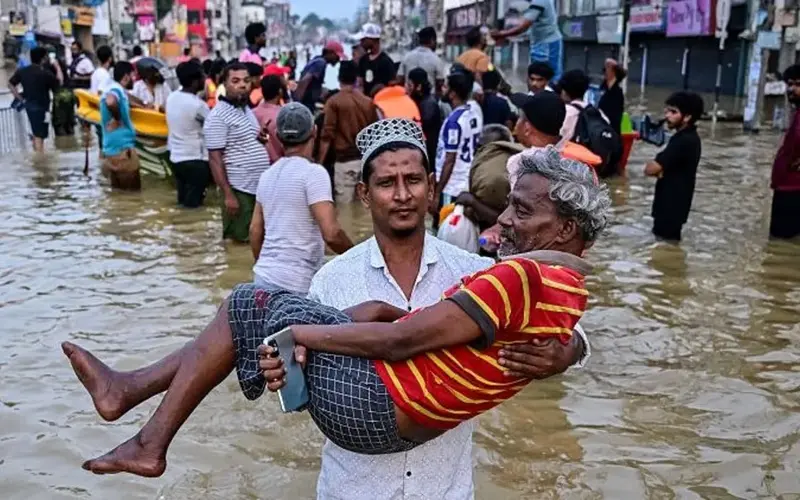
Helping Hands in Sri Lanka
Thursday, 2025/12/04236 words3 minutes2959 reads
In the aftermath of Cyclone Ditwah, which has been deemed Sri Lanka's most catastrophic weather event in recent history, a remarkable surge of volunteerism has emerged, exemplifying the nation's resilience in the face of adversity.
The cyclone's devastating impact, resulting in over 460 fatalities and leaving countless individuals displaced, has galvanized citizens from diverse backgrounds to contribute to relief efforts. Notable among these volunteers is GK Reginold, an actor and musician, who has repurposed fishing boats to navigate Colombo's inundated suburbs, delivering vital supplies to isolated communities.
Concurrently, a group of activists, previously engaged in political protests, have redirected their organizational skills towards establishing community kitchens. These facilities are now instrumental in providing sustenance to those affected by the disaster. This transformation of political activism into humanitarian aid underscores the adaptability and commitment of Sri Lanka's civil society.
The digital sphere has also played a pivotal role in coordinating relief efforts. Volunteers have developed online platforms to facilitate the efficient distribution of aid, matching donations with areas of greatest need. This innovative approach has significantly enhanced the effectiveness of the relief operations, demonstrating the potential of technology in crisis management.
Despite facing criticism over disaster preparedness, the government has called for national unity in rebuilding efforts. The overwhelming response from citizens, transcending political and social divides, reflects a profound sense of solidarity and compassion, which may prove instrumental in Sri Lanka's recovery from this unprecedented calamity.