Museums Want Visitors to Use Their Hands
Saturday, 2026/07/18252 words4 minutes2179 reads
For generations, the cardinal rule of museum etiquette was unambiguous: "Please do not touch." Valuable paintings, sculptures, and historical artifacts were meticulously protected behind glass barriers, with proximity alarms discouraging even the slightest encroachment. Today, however, an increasing number of institutions are fundamentally reconsidering this long-standing convention.
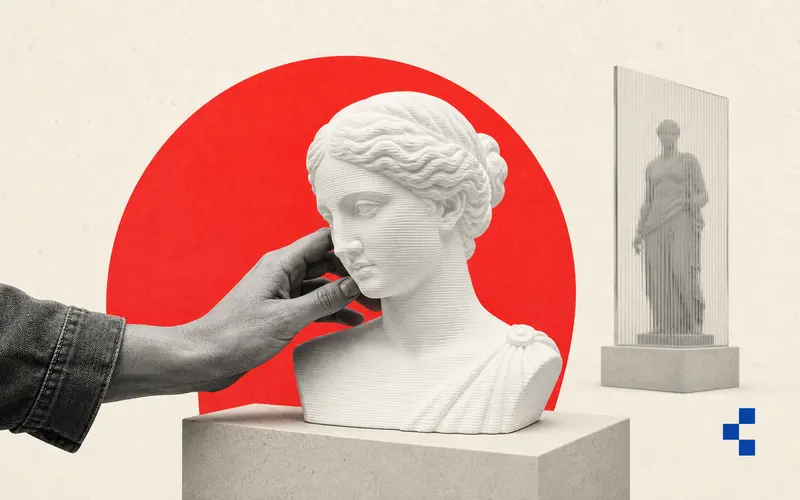
Museums worldwide are introducing interactive exhibitions that actively encourage visitors to engage with selected objects through tactile exploration. This paradigm shift stems from contemporary research demonstrating that multisensory learning experiences create more durable memories than purely visual observation. Museum educators argue that physically handling a fossil, experiencing the texture of ancient building materials, or manipulating a replica of a historical implement forges stronger emotional connections than passively reading descriptive text.
Accessibility considerations have also catalyzed this transformation. Traditional exhibition design inherently disadvantages blind and visually impaired visitors, who cannot fully appreciate displays conceived exclusively for visual consumption. Many institutions now produce 3D-printed reproductions of renowned sculptures and artifacts, enabling these visitors to explore independently. When paired with comprehensive audio guides, such tactile models create substantially more inclusive experiences.
Technological advances have facilitated the proliferation of interactive exhibitions. Modern materials enable museums to fabricate remarkably authentic replicas that withstand repeated handling without jeopardizing irreplaceable originals. Some institutions integrate physical objects with augmented reality, projection mapping, or digital interfaces, allowing visitors to visualize how ancient implements functioned or how deteriorated artifacts appeared in their original condition. Despite these innovations, curators must continually balance preservation imperatives with public engagement objectives—a challenge that remains central to contemporary museum practice.