From Scientist to Silk Farmer: India's Silk Industry Renewal
Friday, 2026/05/08196 words3 minutes4124 reads
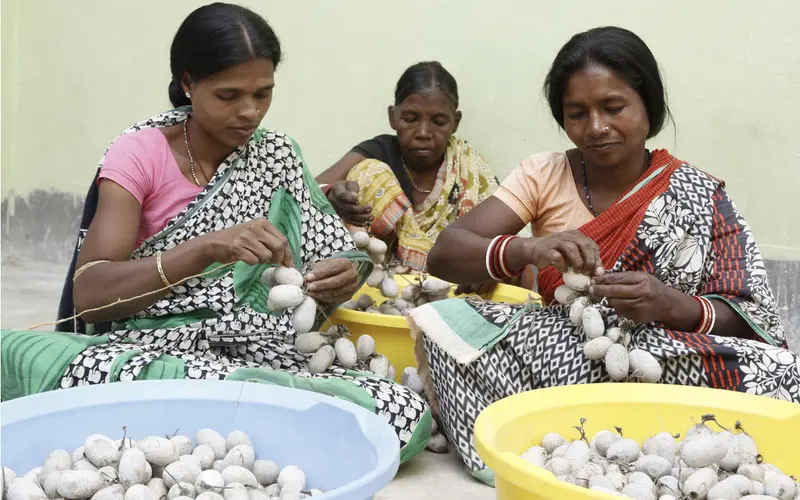
Six years ago, Dr Jolapuram Umamaheswari abandoned her scientific career in Singapore to pursue an unconventional path in India. Returning without employment prospects, she was determined to establish her own enterprise. After extensive research, she identified sericulture as an opportunity that merged biology, precision, and commerce.
The transition proved arduous. Disease outbreaks, inconsistent yields, and the complexities of managing living systems presented formidable challenges. However, her scientific methodology enabled incremental improvements in hygiene protocols, feeding practices, and environmental regulation. These refinements compounded into enhanced survival rates and superior cocoon quality. Currently producing ten annual crops with 25-30 day cycles, she generates approximately $1,000 monthly, creating a steady income stream uncommon in agriculture.
The broader industry is experiencing a digital and biotechnological transformation. Companies like Asho Farms employ computer vision and machine learning to detect larval diseases with over 99% accuracy, enabling immediate intervention. Automated sensors regulate temperature and humidity, critical factors given that silkworms grow nearly a thousandfold in 25 days. Genome editing research, conducted in collaboration with international partners, has yielded disease-resistant varieties. India, the world's second-largest silk producer, uniquely cultivates all four commercial silk varieties, including Muga silk found exclusively in Assam and Meghalaya.