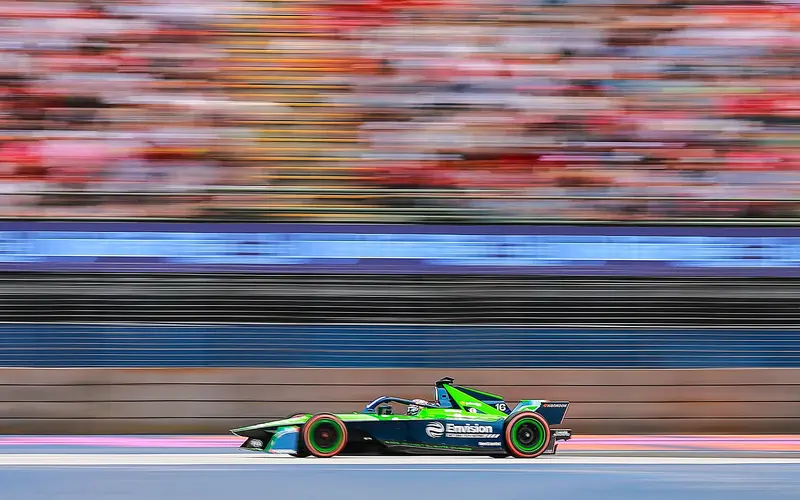
Formula E: Electric Racing Innovation
Thursday, 2026/04/16237 words3 minutes2234 reads
Since its inaugural season in 2014, Formula E has evolved from a napkin sketch in a Paris restaurant to a prestigious international racing championship. With 22 drivers piloting single-seater electric vehicles capable of exceeding 320 kilometers per hour, the series has attracted 344 million viewers worldwide and secured over $102 million in sponsorship for the 2023-2024 season.
The engineering challenges inherent in Formula E battery development are formidable. These power units must deliver sustained high performance while adhering to strict weight limitations of 284 kilograms—approximately one-third of the vehicle's total mass. Unlike conventional road EVs, which experience performance degradation as battery charge depletes, Formula E batteries must maintain consistent output throughout races. This necessitates sophisticated cooling systems and ultra-fast charging capabilities that push the boundaries of current technology.
Only elite firms like WAE, McLaren, and Lucid Motors' Atieva division possess the expertise to manufacture batteries meeting these exacting specifications. While profit margins on individual units may be modest, the intellectual property generated through Formula E development holds substantial commercial value. Innovations such as immersion cooling—where batteries are submerged in dielectric fluid—and advanced fast-charging protocols could be licensed to mainstream automakers. As Ashley Nunes of Harvard University notes, the companies investing in this technology have deep pockets and long-term strategic interests. Graham Evans of S&P Global Mobility suggests Formula E serves as an incubator, helping the industry "understand the art of the possible" for future electric vehicle development.