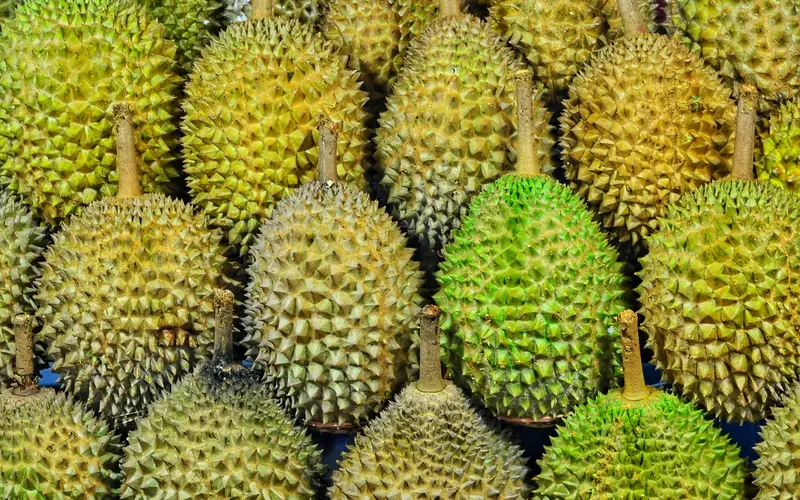
Durians: The Popular Fruit in Asia
Thursday, 2026/01/15173 words3 minutes3213 reads
The exponential growth of China's durian imports, reaching an unprecedented $7 billion in 2024, has catalyzed a significant transformation in Southeast Asian agricultural economies. This phenomenon has elevated the humble durian from a regional delicacy to a potent tool of economic diplomacy.
The town of Raub in Malaysia exemplifies this shift, having reinvented itself from a gold mining hub to the epicenter of Musang King durian production. This premium variety, colloquially dubbed the 'Hermès of durians', commands exorbitant prices in the Chinese market, reflecting a broader trend of durians becoming status symbols and luxury gifts among China's burgeoning middle class.
However, this durian-driven economic boom is not without its complexities. It has precipitated environmental concerns, as farmers clear land to expand durian orchards. Moreover, China's efforts to cultivate its own durians in Hainan province hint at a potential future shift in the market dynamics. While currently nascent, this initiative underscores China's broader strategy of achieving self-sufficiency in various sectors, potentially reshaping the geopolitical landscape of the durian trade in the years to come.