Dinosaur Footprints Discovery in Italy
Tuesday, 2025/12/23236 words3 minutes3299 reads
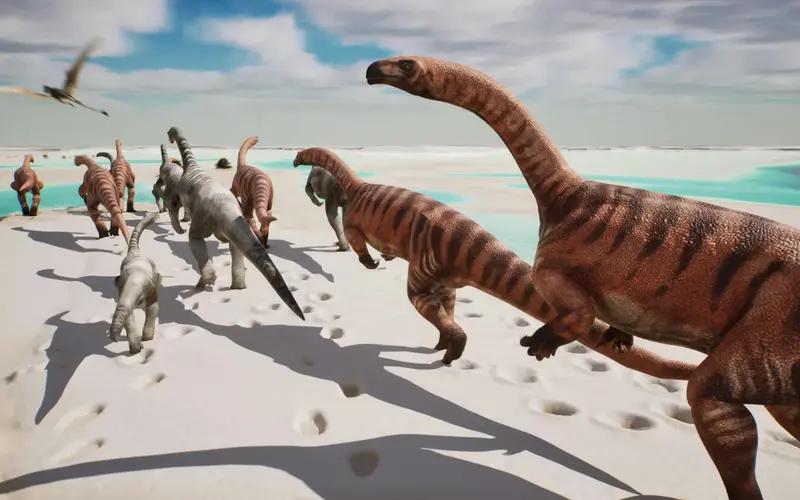
In a groundbreaking discovery, thousands of dinosaur footprints dating back 210 million years have been uncovered in the Stelvio national park in northern Italy. These Triassic-era tracks, some measuring up to 40 cm in diameter, are believed to have been left by prosauropods - herbivorous dinosaurs characterized by their long necks, small heads, and sharp claws.
The extensive trackways, stretching for hundreds of meters along a vertical mountain wall, were initially spotted by photographer Elio Della Ferrera last September. Paleontologists have since determined that this site, once a tidal flat during the Triassic period, later became incorporated into the Alpine chain through tectonic processes.
Cristiano Dal Sasso, a Milan-based paleontologist, expressed his astonishment at the discovery, emphasizing its scientific significance. The footprints not only provide insight into the physical characteristics of these ancient creatures but also offer clues about their behavior. Parallel rows of tracks suggest coordinated herd movements, while circular groupings may indicate defensive formations.
The prosauropods, which could reach lengths of up to 10 meters, were primarily bipedal. However, the presence of handprints alongside some footprints suggests that these animals occasionally rested on their forelimbs. This finding adds nuance to our understanding of prosauropod locomotion and behavior.
Given the site's remote location and inaccessibility, researchers plan to employ drones and remote sensing technology for further study. This innovative approach to paleontological research underscores the intersection of cutting-edge technology with the study of prehistoric life.