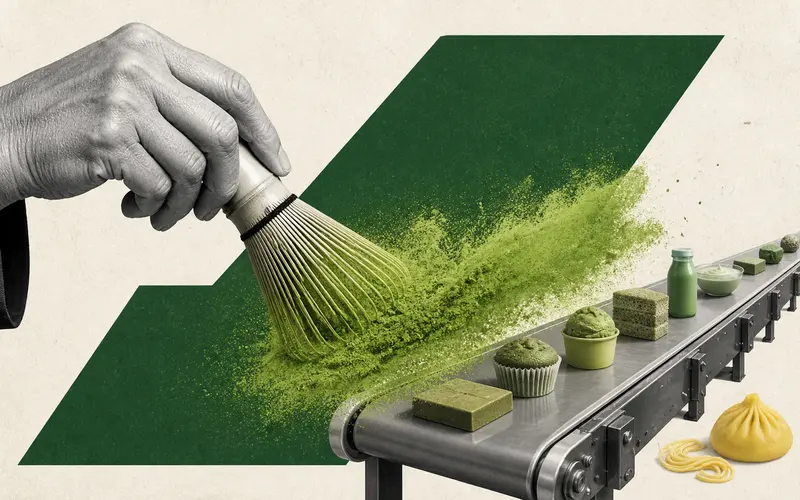
China Is Becoming the World's Matcha Factory
Tuesday, 2026/08/18195 words3 minutes1950 reads
Matcha, the finely ground green tea powder deeply embedded in Japanese cultural traditions, is undergoing a significant geographical shift in production. China is forecast to produce nearly 18,000 tonnes of matcha this year, constituting approximately 70% of global output. This transformation is particularly concentrated in Guizhou province, where industrial-scale, increasingly mechanised supply chains are reshaping the matcha industry.
The phenomenon raises intriguing questions about how foods strongly associated with one culture can become major manufacturing industries in another. While matcha remains culturally linked to Japanese tea ceremonies and culinary traditions, Chinese producers are leveraging economies of scale and advanced mechanisation to dominate global supply. This does not diminish the cultural significance or quality distinctions of Japanese matcha, but it does illustrate how industrial production can be geographically separated from cultural origins.
Beyond traditional applications in beverages and desserts, Chinese businesses are innovating with matcha as a versatile ingredient. Experimental products include matcha-infused noodles and dumplings, reflecting a strategic effort to diversify tea powder applications across consumer product categories. This expansion demonstrates how a specialized ingredient can be reimagined for mass-market food manufacturing, potentially transforming matcha from a niche cultural product into a ubiquitous global commodity.