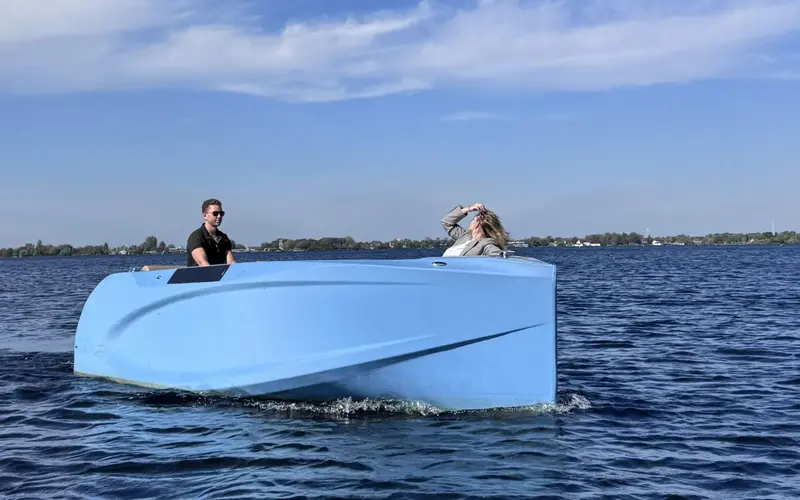
3D Printing: A New Wave in Boat Manufacturing
Tuesday, 2025/12/02247 words4 minutes3333 reads
The maritime industry is witnessing a potential revolution with the advent of large-scale 3D printing technology. Companies like CEAD in Delft, Netherlands, are at the forefront of this innovation, utilizing massive 3D printers to fabricate boat hulls in a fraction of the time required by traditional methods.
The process employs a proprietary blend of thermoplastics and fiberglass, meticulously developed to withstand the rigors of marine environments. This material exhibits remarkable durability, resisting UV damage and marine fouling without additional protective coatings. The additive manufacturing technique allows for the creation of seamless, structurally sound vessels, automating up to 90% of the conventional boat-building process.
While consumer adoption remains nascent, the technology is gaining significant traction in specialized sectors. The Dutch Navy has already commissioned a prototype 12-meter fast boat, demonstrating the potential for rapid, cost-effective production of military vessels. Moreover, the flexibility of 3D printing is proving invaluable in the burgeoning field of nautical drones, allowing for on-site production and real-time design modifications to meet evolving operational requirements.
Despite these advancements, the industry faces challenges. Regulatory bodies are scrambling to keep pace with these innovations, necessitating real-time engagement between manufacturers and certification authorities. Additionally, while 3D printing has proven effective for smaller vessels, its application to large-scale shipbuilding remains a distant prospect, requiring further material research and technological scaling.
Nevertheless, proponents of the technology remain optimistic about its long-term potential to transform maritime manufacturing, potentially revolutionizing everything from leisure craft to commercial shipping in the decades to come.