3D-Printed House Could Help Solve Japan's Construction Crisis
Sunday, 2026/05/24232 words3 minutes4199 reads
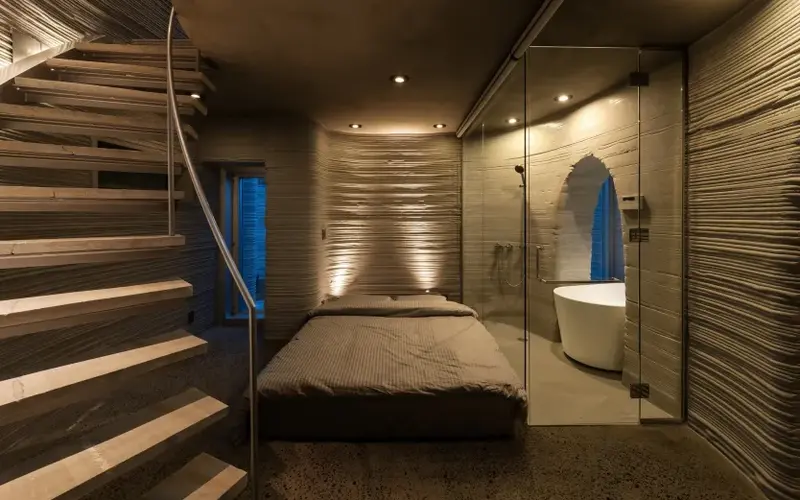
Japan's construction industry confronts a severe productivity crisis as soaring material costs and an aging workforce threaten the nation's $625 billion sector. An innovative solution has emerged in the form of "Stealth House," Japan's first earthquake-proof 3D-printed two-story residence, unveiled in February by building-tech startup Kizuki in collaboration with over 20 companies.
Inspired by natural cave formations, the 6-meter tall, 50-square-meter dwelling took merely 14 days to print on-site using a giant gantry printer. The exterior walls employed a hollow structure filled with reinforced concrete to comply with stringent seismic design codes—essential in earthquake-prone Japan. The home successfully completed the entire process from digital design to finishing works at a residential scale.
3D-printed construction technology promises substantial benefits: time savings, reduced labor requirements, enhanced worksite safety, and dramatically decreased material waste. Yet institutional caution and regulatory inertia have impeded widespread adoption. Japan's construction sector faces a critical labor shortage, with 1.5 million skilled workers—45% of the total—expected to retire within a decade. 3D printing can consolidate up to seven traditional trades, potentially recovering five to ten percentage points of productivity worth trillions of yen.
Despite high upfront equipment costs, the primary obstacles remain institutional rather than technological. Standardized evaluation methods and dedicated regulatory frameworks are necessary for broader implementation. However, the successful sale of Stealth House and its inclusion in government initiatives signal changing attitudes, potentially making future approval processes substantially smoother.