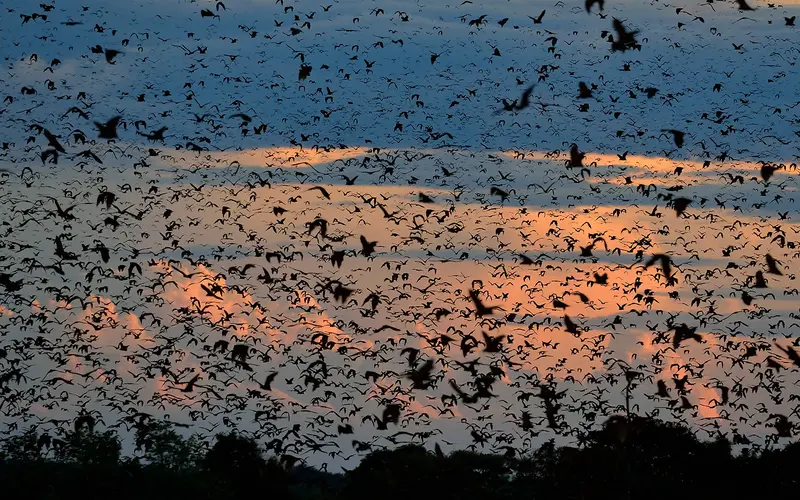
The World's Largest Mammal Migration
Thursday, 2026/06/18193 words3 minutes1820 reads
Each year between October and December, an estimated eight to ten million straw-coloured fruit bats gather at Kasanka National Park in Zambia. This creates the largest mammal migration on Earth, with eight times more mammals than the famous Serengeti migration. Yet fewer than 1,000 people witness this extraordinary spectacle annually.
The bats arrive from across Central Africa, drawn by a seasonal abundance of fruit. Each night, they consume their own body weight in wild loquat, waterberries and other fruits, traveling up to 96 kilometers in a single night. One tracked bat named Hercules flew over 2,400 kilometers. Scientists estimate the colony consumes around 330,000 tonnes of fruit during their stay.
As the bats feed, they disperse seeds across vast distances, playing a crucial role in forest regeneration. Researchers say these bats can spread seeds further than many other animals, including elephants. At sunset, millions of bats pour from the forest in a swirling vortex, creating an unforgettable natural phenomenon.
Kasanka National Park, one of Zambia's smallest reserves at just 390 square kilometers, offers visitors a peaceful alternative to crowded safari destinations. The park also protects sitatunga antelope, hippos and over 450 bird species.