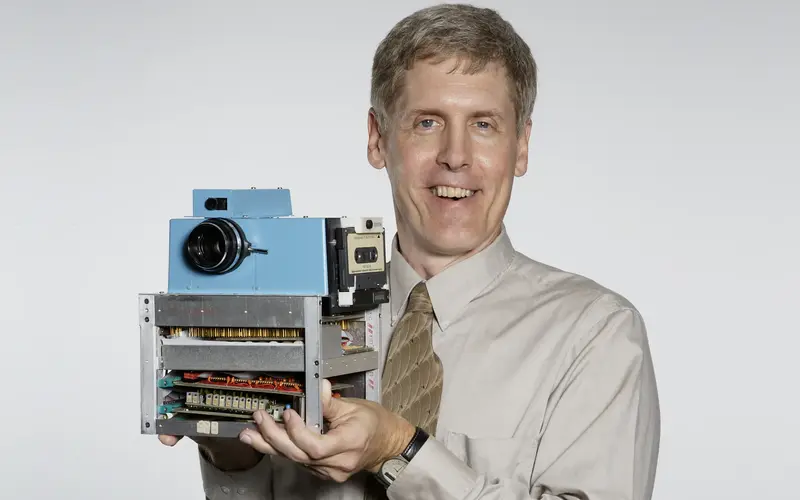
The First Handheld Digital Camera: A Revolutionary Invention
Tuesday, 2025/12/09146 words2 minutes3459 reads
In 1975, Steve Sasson, a young engineer at Kodak, created the world's first handheld digital camera. This groundbreaking invention was a bulky device weighing 8 pounds and resembling a toaster with a lens. Unlike traditional cameras, it didn't use film. Instead, it captured images electronically and stored them on a cassette tape.
The camera's resolution was only 0.01 megapixels, producing grainy black and white images. It took 23 seconds to record a single photograph. Despite its limitations, this invention marked the beginning of a new era in photography.
Sasson's creation was met with mixed reactions at Kodak. Some executives were fascinated, while others questioned its practicality. At the time, Kodak was a leader in film photography, and the idea of filmless cameras seemed far-fetched to many. However, Sasson's invention laid the foundation for the digital photography revolution that would transform the industry in the coming decades.