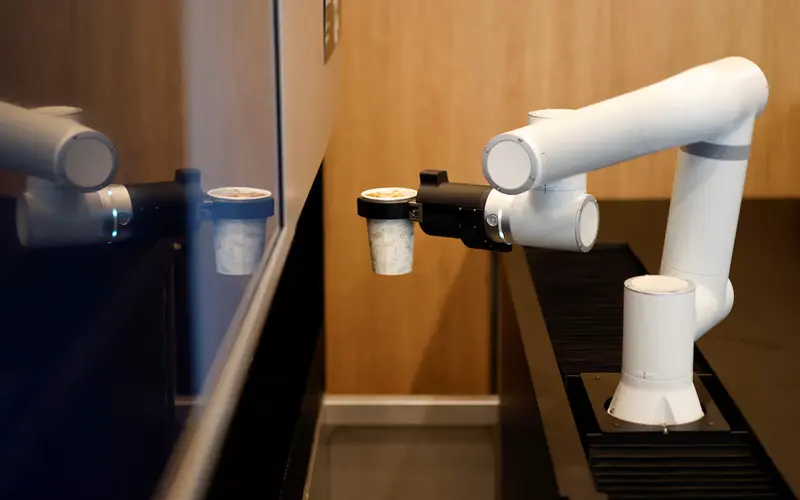
South Korean Shops Use Robots as Workers
Monday, 2026/07/06187 words3 minutes1571 reads
More businesses in South Korea are operating without full-time staff as owners struggle with rising labor costs and fewer available workers. Unstaffed shops now include coffee shops, restaurants, flower stores, and clothing outlets. Customers place orders and make payments through machines, while cameras and digital systems allow owners to monitor their stores remotely.
Some businesses have introduced robots. Lounge X, a robotic coffee-shop operator, uses a robotic arm called Baris to prepare various drinks. These stores can stay open 24 hours a day. A human worker typically visits once daily to restock supplies and clean equipment.
While traditional cafés may generate higher revenue, they face much greater labor expenses. An unstaffed store can achieve a profit margin of around 40%, compared to just 10% to 15% at a conventional café. By the end of 2024, South Korea had approximately 9,000 unstaffed shops, and this number is expected to grow significantly.
The trend reflects South Korea's demographic challenges, including an ageing population and one of the world's lowest birth rates. As fewer young people enter the workforce, hiring staff has become increasingly difficult and expensive for many businesses.