Scientists Search for Habitable Planets
Sunday, 2026/07/12223 words3 minutes2117 reads
For centuries, humans have wondered whether life exists beyond Earth. Now, new tools in astronomy are helping scientists search for planets that may have the right conditions for life.
These worlds are called habitable planets. Scientists are especially interested in planets that may have liquid water, a stable atmosphere, and temperatures that could allow biological activity.
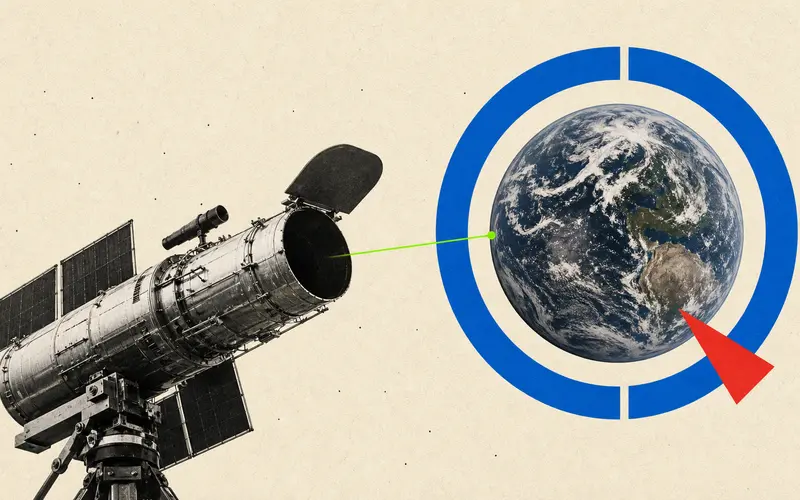
The search is difficult because most of these planets are many light-years away. Scientists cannot travel to them, so they study them from a distance. Powerful telescopes can measure how light changes when a planet passes in front of its star. This can help researchers learn about the planet's size, orbit, and sometimes its atmosphere.
Space telescopes have already helped discover thousands of planets outside our solar system. A few of them look promising enough for further study, but scientists are careful about their claims.
A planet that could support life is not the same as a planet where life has been found. Researchers still need stronger evidence, such as atmospheric chemicals that might suggest biological activity.
The search also raises a deeper question about humanity's place in the universe. If life is discovered elsewhere, it could change how people understand Earth and life itself.
Even without a discovery soon, the search is valuable. It improves scientific knowledge about planets, stars, and the possible origins of life.