Memory Crystals for Data Storage
Wednesday, 2026/02/25176 words3 minutes2166 reads
In 1999, researcher Peter Kazansky witnessed an unusual phenomenon in a Japanese laboratory. Scientists were using ultrafast lasers to write on glass, but the light behaved strangely. This discovery led to a breakthrough in data storage technology.
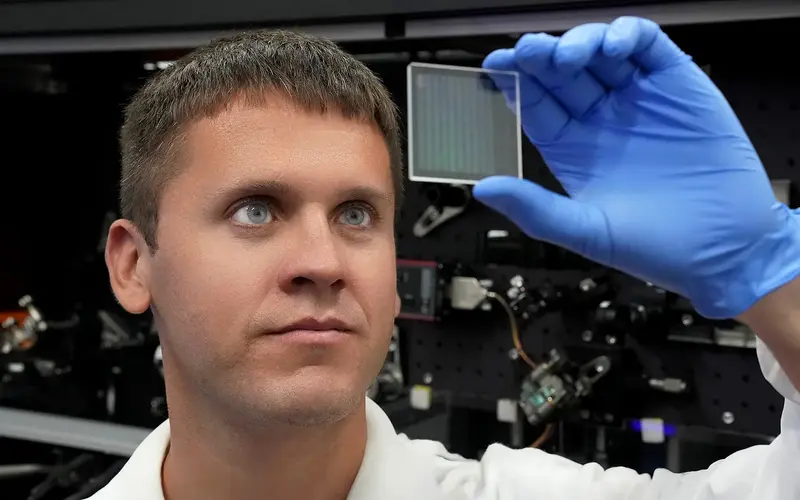
The lasers created tiny nanostructures inside the glass through "micro-explosions." These structures are 1,000 times smaller than a human hair. They can store enormous amounts of data without requiring power to maintain it. Kazansky believes these "memory crystals" could last forever.
Our world faces a serious data problem. By 2028, we will generate 394 trillion zettabytes of data annually. Data centers currently consume 1.5% of global electricity and are projected to double their energy use by 2030. Most stored data is "cold data" that people rarely access but must keep for legal or backup purposes.
Memory crystals offer a sustainable solution. They can hold up to 360 terabytes on a small glass plate and require no energy for storage. Kazansky's company, SPhotonix, is working with tech companies to introduce this technology to data centers within the next few years.