From Scientist to Silk Farmer: India's Silk Industry Renewal
Friday, 2026/05/08157 words2 minutes4206 reads
Six years ago, Dr Jolapuram Umamaheswari made a bold decision. She left her scientific career in Singapore and returned to India without a job. Her goal was to become her own boss.
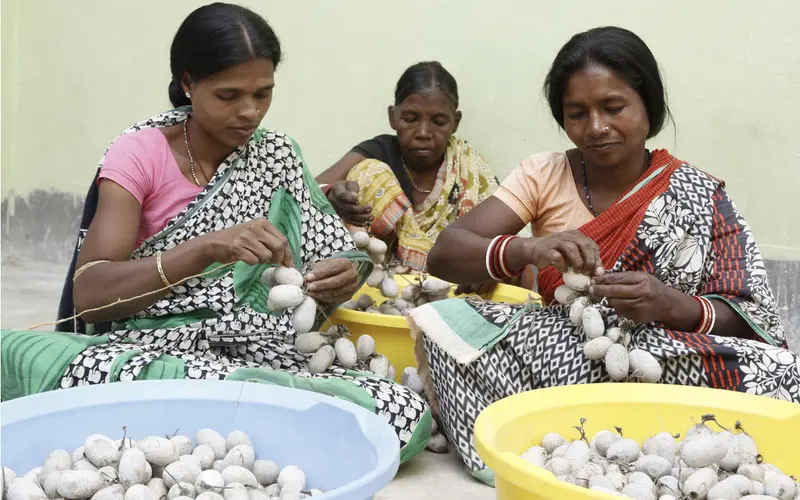
After researching different options, she chose silk farming, also called sericulture. This involves feeding mulberry leaves to silkworms, collecting their cocoons, and extracting silk fibres. The beginning was challenging with disease outbreaks and inconsistent results.
However, her scientific background proved valuable. She improved hygiene practices, feeding methods, and environmental controls. These small changes led to better survival rates and higher quality cocoons. Today, she produces ten crops of raw silk annually, with each cycle taking 25 to 30 days. She earns approximately $1,000 monthly.
India is the world's second-largest silk producer after China. The country produces all four commercial silk varieties, including Muga silk, which is unique to India. Modern technology, including AI and sensors, is transforming the industry and helping farmers achieve better results.