Ancient Humans and Fire: A Groundbreaking Discovery
Friday, 2025/12/12178 words3 minutes2275 reads
A groundbreaking discovery in eastern England has revealed that ancient humans were capable of making fire much earlier than previously believed. Scientists have uncovered evidence at a site called Barnham that suggests controlled fire-making took place around 400,000 years ago.
The research team found several important clues at the site. These included a patch of baked clay, flint tools that had been damaged by intense heat, and fragments of iron pyrite. Iron pyrite is a mineral that can create sparks when struck against flint, making it useful for starting fires.
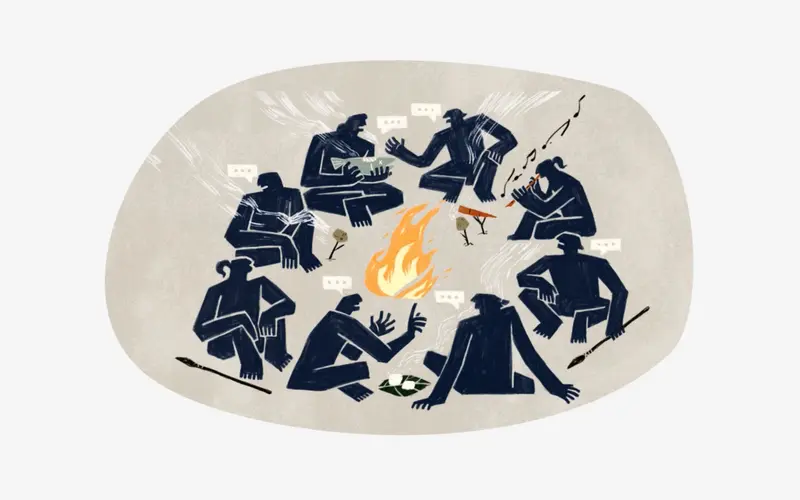
This discovery is significant because it pushes back the earliest known date for controlled fire-making by about 350,000 years. It suggests that early humans, possibly early Neanderthals, were more advanced than we thought. The ability to make fire would have helped these ancient people cook food, stay warm in cold environments, and protect themselves from predators.
The findings have important implications for our understanding of human evolution. Fire-making could have played a crucial role in the development of larger brains and more complex social behaviors among our ancestors.